
Trackers and panels
Modules capture sunlight. Trackers orient the panels to follow the sun and shape the generation profile.
Discover the equipment, energy flows and technical choices behind our reference solar plant model.
Explore the plant01 / MPS001
Select a marker to discover the elements of our model.
Scroll the image to explore
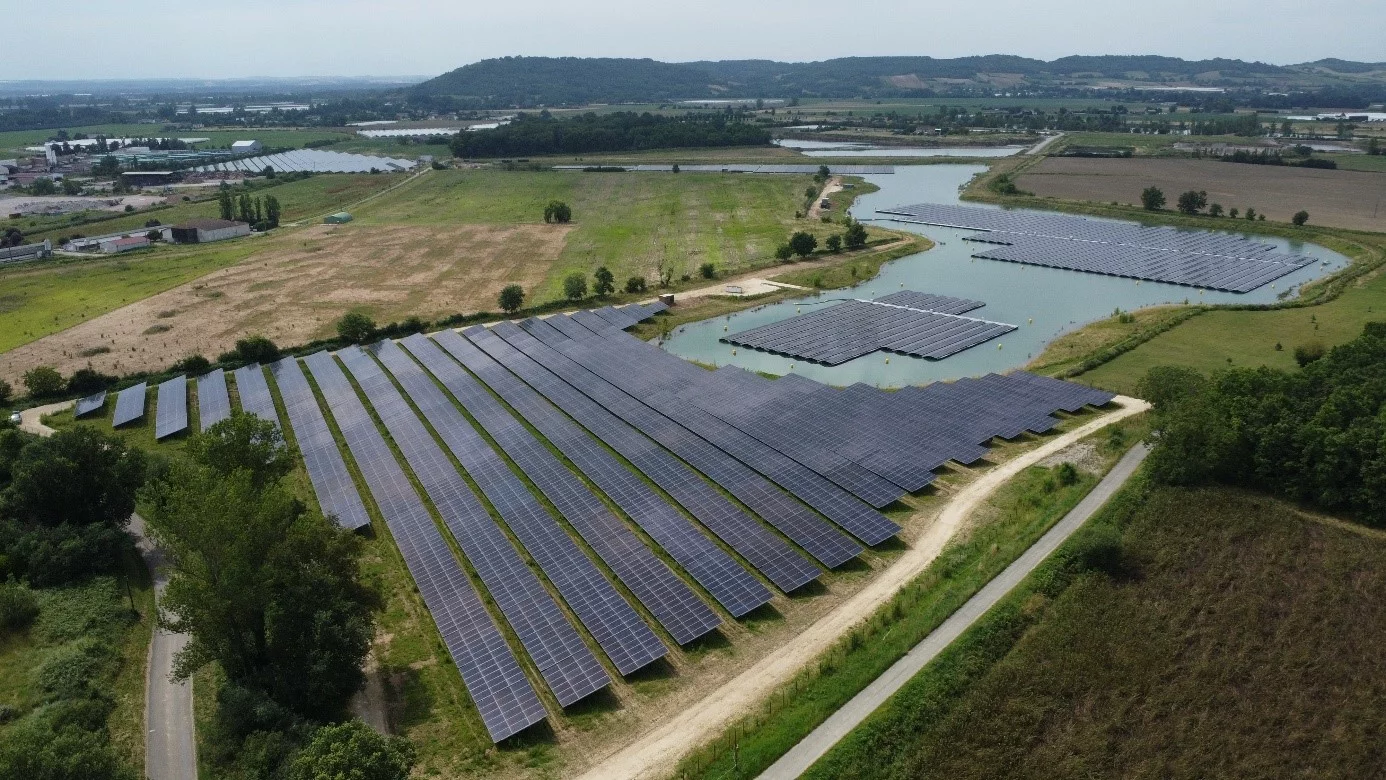
Illustrative photograph of third-party infrastructure: it does not depict MPS001. Markers * are conceptual and do not locate equipment in this image.
Modules capture sunlight. Trackers orient the panels to follow the sun and shape the generation profile.
Inverters convert the panels’ direct current into alternating current suitable for the grid.
Storage can shift part of generation to another hour, within its capacity limits.
The connection allows electricity to be exported and sold under the project’s commercial arrangements.
Access roads support inspections, equipment servicing and site logistics.
Site design considers land use and vegetation, with attention to local habitats.
Vehicle charging is a potential local service, separate from selling generation to the grid.
Computing, telemetry, SCADA, CCTV and communications support remote monitoring. These controls are distinct from power conversion equipment.
Follow energy from sunrise through the evening. Generate, store, sell: every hour counts.
Panel generation
0 kWGrid export
0 kWIllustrative price
0 €/MWhState of charge
0 %Standing by · 0 kW
The curves show an illustrative 24-hour scenario. Enable JavaScript to explore hourly values.
Illustrative scenario. Illustrative day · a teaching scenario, not live data or an MPS production forecast. The illustrative market balance deducts grid purchases from sales at the simulated price, excluding fees and other costs.
03 / MPS001
An architecture and a form of participation are also understood through their differences.
| Aspect | MPS · trackers + storage | Fixed plant without battery |
|---|---|---|
| Orientation | Trackers follow the sun. | Fixed tilt throughout the day. |
| Generation | A profile shaped by tracking; gains depend on the site. | A profile shaped by fixed orientation and local conditions. |
| Storage | A battery can shift some generation to another time. | No storage in this comparison. |
| Midday prices | Storage can reduce exposure to lower-price hours. | Generation is sold under conditions available at export. |
| Sales | Flexibility can open other sales windows. | Sales follow generation and site contracts. |
| Cost and operation | More equipment, capital and maintenance; economic outcomes remain uncertain. | Fewer moving components and no battery, with less flexibility. |
| Aspect | Financial participation in MPS | Rooftop panels |
|---|---|---|
| Roof | No personal roof required. | A suitable roof is required. |
| At home | No individual panels installed at the participant’s home. | Panels are installed on the building. |
| Maintenance | Professional operation at project scale. | The owner handles or arranges maintenance. |
| Benefit | Potential remuneration under future terms. | Electricity-bill savings and/or surplus sales. |
| Accessibility | The model also aims to include renters and apartment residents. | Depends on access and rights to a roof. |
| Nature and risk | Financial participation risks loss of capital; no ownership of individual panels. | Investment in equipment with variable costs and performance. |